
Heat leaves a building in proportion to one number: the difference between the temperature inside and the temperature outside. Everything else follows from it.
The gap is 15 degrees — A hall held at 15 °C, an Estonian heating season averaging about 0 °C outdoors from October to April. Those 15 degrees are 100% of what you pay to heat.
1 degree is 1/15 of the bill — Let the hall settle at 16 °C and it needs 6.7% more heat, every hour the heating runs, for the whole season.
The same hall at 19 °C — A hall meant for 15 that actually sits at 19 is not a rounding error: 26.8% more heat across the season. On the invoice it looks like the weather.
You only see it in the record — 1 degree is invisible: nobody feels it, nothing alarms, and the bill arrives as a single number. It shows up only as a line on a graph — a zone sitting higher than it should, week after week — or as an alert the moment it drifts.
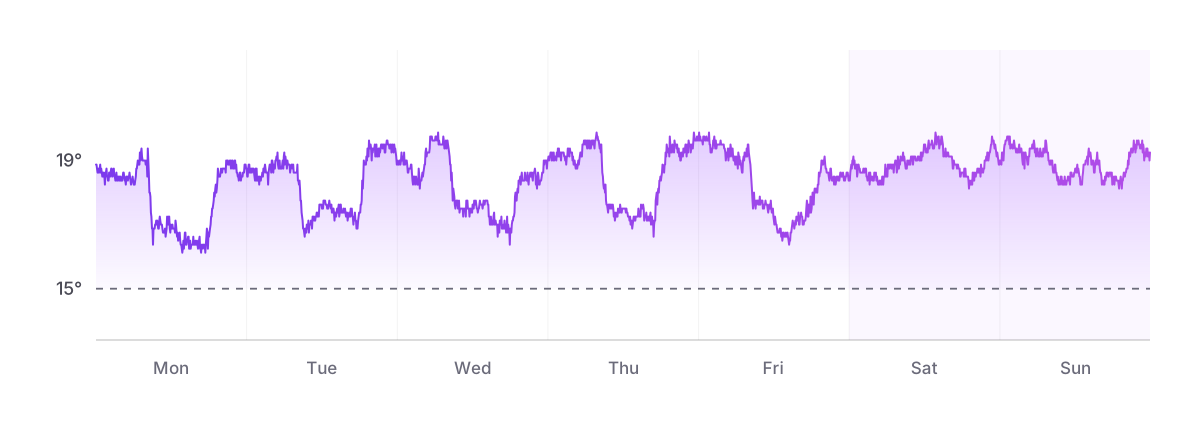
Overheating is rarely a decision. It is what a building does when nothing measures it.
One number for the whole building — A thermostat holds one spot at 15 °C. If that spot is the coldest corner, everything else sits above it: 17 here, 19 there. The average across the building ends up well over the number you chose, and there is nothing on site that would show it. What brings it back down is balancing the heating and the ventilation, and dealing with the cold spots that forced the setting up in the first place — a draughty window, an uninsulated wall, a gate that stands open.
The hours after everyone leaves — People go home, ventilation drops to night mode or stops, doors stay shut. The heating carries on exactly as it did at noon, but now there is far less air movement carrying the heat away — so the temperature climbs. A boiler can be scheduled down for those hours, but only once somebody knows what actually happens in them.
Doors and windows — Some openings should simply be shut for good. Others are part of the work: a gate that has to open for a truck. A contact sensor tells the two apart by recording which opened, when, and for how long — and turns a recurring argument into a number.
Two things change once the temperature is on record.